
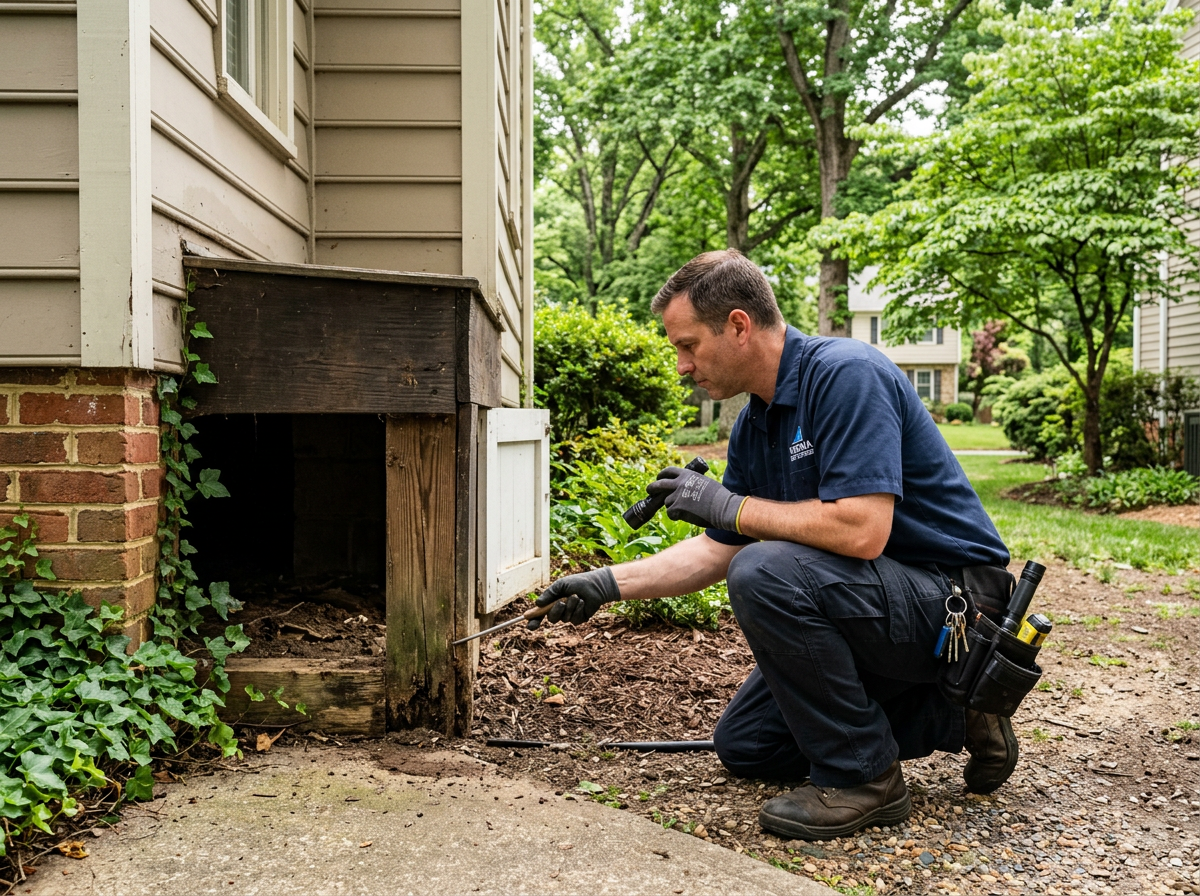
Subterranean termites in the Midlothian area travel through clay-heavy Piedmont soils that stay damp for weeks after rain, letting them reach untreated wood without surfacing. Homes built from the 1970s onward often have crawl spaces with poor ventilation and soil-to-wood contact at sills and piers, giving colonies direct access. A proper inspection requires lifting insulation, probing baseboards, and checking expansion joints where mud tubes form overnight once humidity rises.
Daytime visual checks miss active foraging when tubes are broken or soil has been disturbed by recent grading. Technicians follow utility lines and plumbing penetrations because termites use these as highways from the ground into framing. In neighborhoods with retention ponds or French drains that stay wet, colonies can bridge chemical barriers by building new shelter tubes along the moist paths, which is why re-inspection after heavy rain is often needed.
Termite Inspection Near You — Choose Your City
Every city below has its own local Termite Inspection page with coverage details.
Albemarle County
Fairfax County
Prince William County
Independent City
Nottoway County
Henrico County
Loudoun County
Orange County
Essex County
Shenandoah County
King George County
Poquoson
Pittsylvania County
Radford
Powhatan County
Spotsylvania County
Other areas
Dickenson County
Fairfax
Floyd County
Brunswick County
Middlesex County
Amelia County
Mathews County
Henry County
Augusta County
Greene County
Halifax County
King William County
Frederick County
Mecklenburg County
Gloucester County
Washington County
False negatives occur when inspectors skip attic sheathing or overlook foam board insulation that hides galleries. Virginia termite pressure stays high from April through October, so seasonal monitoring stations placed around the foundation give early warning before swarms appear inside the house. The work stops at locating activity and recommending targeted follow-up; it does not include treatment or structural repair.
Technician insight
In Midlothian, the thing that catches most people out with Termite Inspection is how the heavy clay holds water right against the foundation for weeks, letting termites rebuild tubes faster than homeowners expect after a single rain event.
Crawl-Space Find After Recent Grading
New mulch and re-grading around a 1990s Midlothian ranch had pushed soil against the brick skirt. During the inspection fresh mud tubes were found along three piers where the new grade created direct wood contact. The tubes were documented and the homeowner was advised to lower the soil line before any treatment could hold.
Termite Inspection Services We Offer
✓Crawl Space Termite Inspection
Full crawl-space survey for mud tubes, damaged joists, and soil contact points typical in Midlothian homes with pier-and-beam construction.
✓Foundation Perimeter Inspection
Exterior check of slabs, expansion joints, and weep holes where subterranean termites enter from the surrounding clay soil.
✓Wood-Destroying Insect Report
Written report documenting active or previous termite evidence required for real-estate transactions in central Virginia.
✓Moisture Source Identification
Assessment of plumbing leaks, poor grading, and HVAC condensation that create the damp conditions termites need to survive.
✓Attic and Framing Inspection
Inspection of roof sheathing, rafters, and top plates for hidden galleries that start from below-grade entry points.
How it works
- 1
Exterior Walk-Around
Examine the foundation, siding, and grade for mud tubes, shelter tubes, and soil-to-wood contact around the entire perimeter.
- 2
Crawl Space Entry
Probe sills, piers, and subflooring while checking for active termites and moisture issues common to local clay soils.
- 3
Interior Probing
Check baseboards, door frames, and utility penetrations inside the home for hidden damage or galleries.
- 4
Report and Recommendations
Document findings and note conditions that require follow-up monitoring or treatment by a qualified applicator.
Pricing
Inspection scope varies with home age, crawl-space access, and square footage; call to schedule and receive a site-specific quote.