
2026-09-12 ·
How Midlothian Weather Patterns Affect Mosquito Control Timing
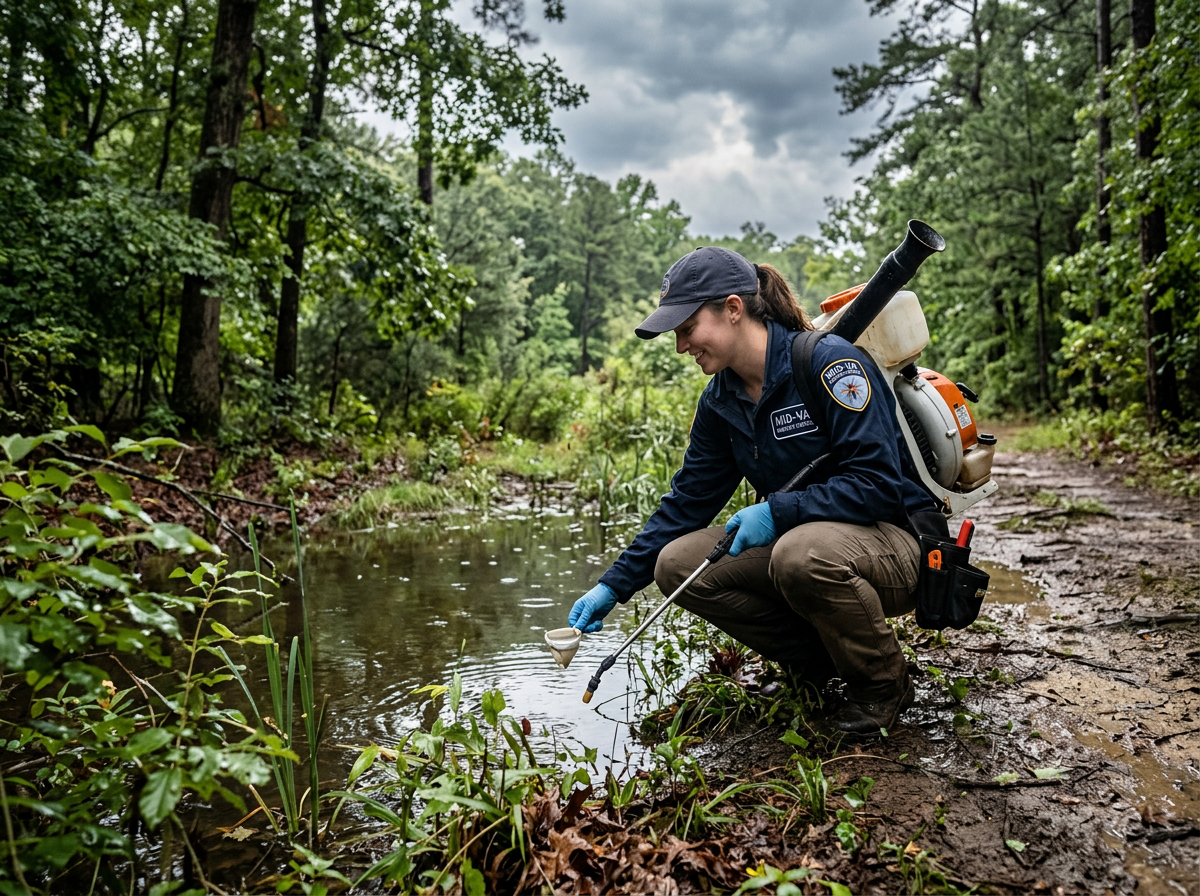
Midlothian weather patterns push mosquito control timing into a clear April-to-October window, with the heaviest pressure arriving after summer storms create new standing water and accelerate egg-to-adult cycles in as little as seven days. Source reduction must come first, followed by targeted barrier spraying once larvae appear in containers holding as little as one inch of water. Local Piedmont conditions, including warm days and frequent evening humidity, keep Aedes albopictus active during daylight hours and require repeated attention after each rainfall event greater than one-half inch.
Spring Warm-Up and First Treatments
Midlothian temperatures climb above 60 degrees in April and trigger the first hatches of container-breeding mosquitoes. Property owners who empty birdbaths, gutters, and plant saucers before mid-month reduce the initial population before adults emerge. Barrier applications applied in late April hold through the cooler nights that still occur in the Piedmont region. Waiting until May risks missing the early generation that sets the season's baseline pressure. Consistent weekly checks of shaded containers remain the most reliable step until consistent 70-degree days arrive.
Summer Storms and Rapid Population Spikes
Thunderstorms between June and August drop enough rain to fill every low spot and container on Midlothian lots within hours. Each event restarts the seven-to-ten-day development clock for Aedes albopictus, so treatments scheduled more than two weeks apart lose effectiveness. Source reduction performed within forty-eight hours after storms removes the new sites before larvae reach the pupal stage. Barrier sprays applied to vegetation and shaded structures then suppress the adults that survive the cleanup. Properties that skip the post-storm check see biting activity return within ten days even after a prior treatment.
Temperature Swings and Development Speed
Daily highs above 85 degrees shorten the egg-to-adult cycle to seven days, while nights in the upper 60s keep adults active and seeking blood meals during daylight. Midlothian residents notice increased daytime biting on patios once these conditions persist for more than a week. Control timing therefore moves from monthly checks in spring to bi-weekly inspections once sustained heat arrives. Barrier products perform best when applied early in the morning before peak heat drives mosquitoes into deeper shade. Skipping an application during a heat wave allows a single generation to complete its cycle and restart the problem.
Fall Cooling and Final Applications
Temperatures drop below 70 degrees in October and slow new egg laying, yet existing larvae still mature if containers retain water. A final source-reduction round in early October prevents the last adults from emerging before the first hard frost. Barrier treatments applied in late September can carry protection into the cooler weeks when mosquitoes become less active but still seek shelter. Residents who continue container checks through mid-October avoid surprise hatches during warm spells that sometimes occur after the calendar says the season has ended. This measured close keeps populations from carrying over into the following spring.
Local knowledge of these weather-driven cycles appears in detail in What Midlothian Residents Should Know About Local Mosquito Species and Understanding Mosquito Treatment Schedules Used In Chesterfield County. Residents ready to align their own schedule with Midlothian conditions can review current service options at /services/mosquito-control.