
2026-09-12 ·
Identifying Common Mosquito Breeding Spots On Midlothian Properties
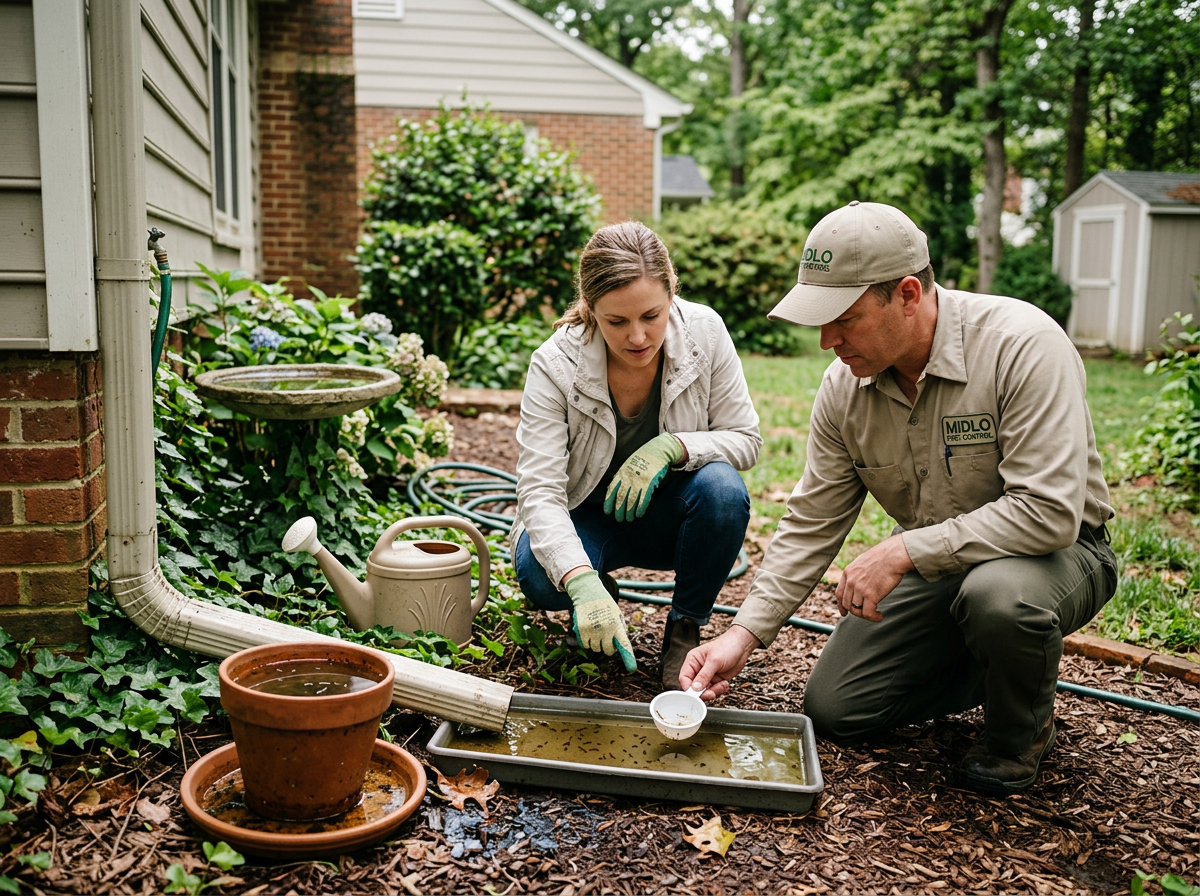
Mosquitoes on Midlothian properties breed in water held as shallow as one-half inch inside containers, with egg-to-adult development occurring in seven to ten days when temperatures stay warm from April through October. Aedes albopictus, the day-biting species common here, uses these tiny sites rather than large ponds. Checking properties after summer storms reveals the new collections that drive population spikes in the Piedmont region.
Standing Water in Everyday Containers
Homeowners often overlook the small vessels that collect rainwater around Midlothian yards. Bird baths, flowerpot saucers, and grill covers hold enough water for larvae within days. Emptying these items weekly interrupts the cycle before adults emerge. Buckets left outside, children's toys, and tarps that sag also trap water after afternoon thunderstorms. Checking under decks and along fence lines catches the hidden spots that refill quickly during the wetter months of the season. Regular inspection prevents the rapid buildup that occurs when containers sit undisturbed for seven days or longer.
Drainage Issues Around Foundations and Gutters
Clogged gutters on Midlothian homes create long troughs of standing water that mosquitoes use throughout the warmer months. Downspouts that empty into low areas near the foundation produce persistent puddles. French drains or grading problems that direct water toward the house increase the number of breeding locations. Clearing debris from gutters before the April start of mosquito season reduces these sites. Checking the ground around air conditioner condensate lines shows another common source that drips steadily during humid summer periods. Addressing these drainage features limits the water that remains long enough for larvae to develop.
Low Spots in Lawns and Landscape Features
Midlothian yards often contain depressions that collect water after heavy rain and stay damp for days. Tree root flares, uneven turf, and mulch beds that hold moisture provide additional breeding areas. Decorative ponds without circulation and poorly maintained bird baths add to the problem when water sits still. Walking the property after storms shows which spots retain water longest. Leveling these low areas or adding drainage improves conditions before the peak months of July and August. Keeping vegetation trimmed around these features also helps water evaporate faster.
Seasonal Timing and Inspection Routine
Mosquito activity in Midlothian begins in April and continues into October, with the fastest breeding after summer storms. Walking the yard every seven days during this window catches new containers and puddles before larvae mature. Focus on shaded areas where water evaporates more slowly and on items moved or filled since the last check. Linking this routine to the after-heavy-rain mosquito prevention steps for Midlothian yards gives a clear schedule. Property owners who combine weekly checks with source reduction methods see fewer adults around living spaces. Consistent inspection remains the most direct way to identify and remove breeding spots on local properties.