
Lyndhurst lies in Augusta County along US-340 as a small Shenandoah Valley community of 1,557 people close to the Blue Ridge. Mosquito pressure builds around spring-fed pools and farm containers that hold water on rural lots.
The humid subtropical climate brings hot summers while cooler nights shorten the active window compared with eastern parts of the state. Crews from Midlothian target breeding sites in outbuildings and troughs that stay common here.
We also reach nearby Waynesboro and Staunton with the same focus on pest control suited to valley properties.
Mosquito Control Services in Lyndhurst, VA
Mosquito Control in Lyndhurst
Source-focused mosquito control across Virginia that targets container breeders and shaded resting spots instead of blan…
Details →Bed Bug Treatment in Lyndhurst
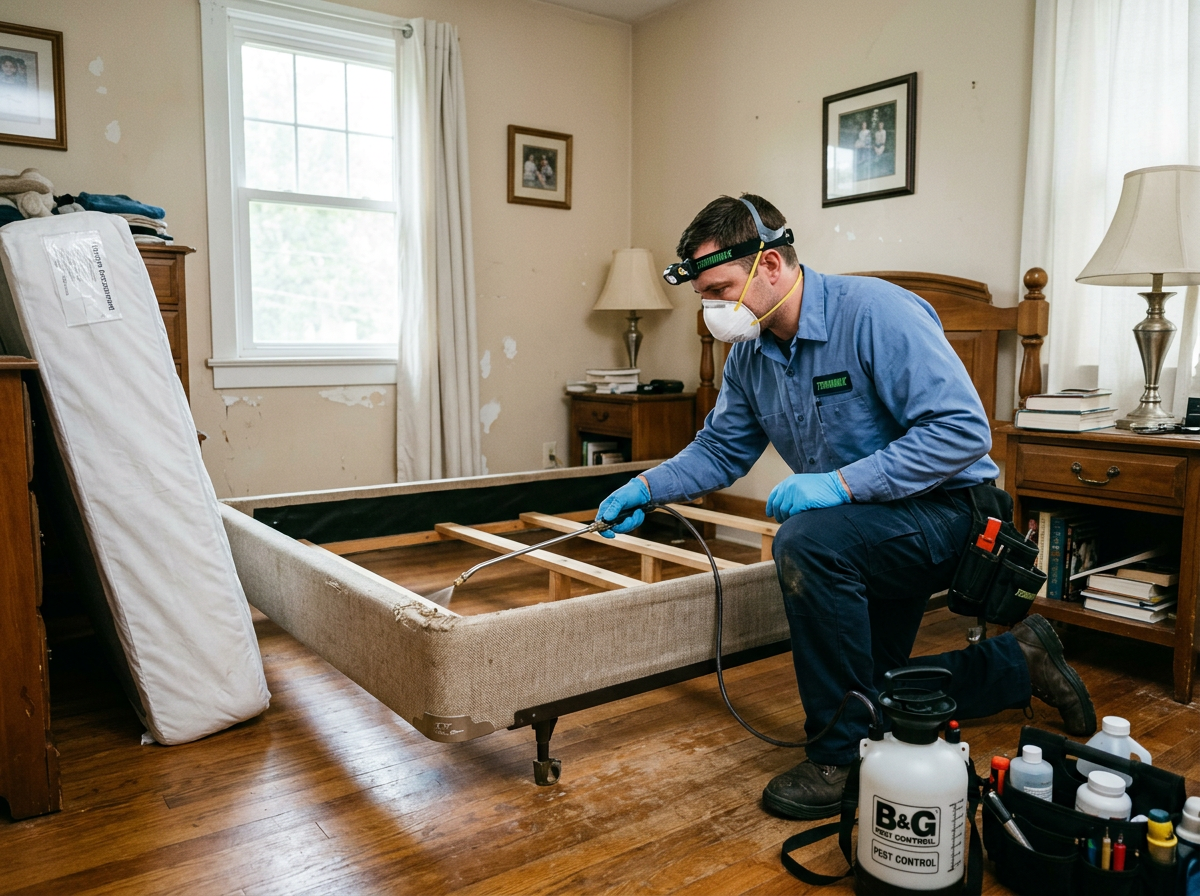
Targeted bed bug elimination for Virginia homes that addresses hiding spots in older construction and stresses proper pr…
Details →Rodent Control in Lyndhurst
Rodent control services built around exclusion work that stops rats and mice from re-entering Virginia properties.…
Details →Roach Control in Lyndhurst
Targeted roach control for Virginia properties that locates breeding sites in humid housing stock and uses baiting plus …
Details →Ant Control in Lyndhurst
Virginia-specific ant control that locates nests in local soil and structures rather than relying on surface sprays alon…
Details →Termite Inspection in Lyndhurst
Detailed termite inspections that locate active colonies and entry points in Virginia housing stock before damage spread…
Details →Mice Removal in Lyndhurst
Targeted mice removal that starts with sealing entry points in Virginia homes rather than relying on bait alone.…
Details →Rat Removal in Lyndhurst
Rat removal focused on exclusion, inspection, and trapping tailored to Virginia housing and landscape conditions.…
Details →Around Lyndhurst
We regularly work near:
- 📍US-340 corridor
- 📍Shenandoah Valley farmlands
- 📍Blue Ridge foothills
Mosquito Control in Lyndhurst — Local Notes
- •Rural lots with outbuildings and troughs create persistent breeding spots that require inspection during each visit.
- •Cooler mountain nights reduce adult activity yet spring-fed sources keep larvae present into fall.
- •Longer drives from the Midlothian base along US-340 call for equipment that handles valley roads and farm access.